The Textile Industry: Spinning the Future of Global Manufacturing
MAY 18, 2026
How LMW’s Smart Series Machinery support mills to survive, sustain, compete and grow?
The textile industry is one of the oldest pillars of human civilization, but today, it stands at the forefront of global innovation. From everyday clothing to advanced technical applications, textiles are deeply integrated into modern life.
What makes this industry unique is its ability to constantly evolve, adapting to changing consumer demands, technological advancements, and global economic shifts.
A Truly Global Value Chain
The textile industry operates across a vast and interconnected value chain,
- Fiber production
- Spinning
- Weaving/knitting
- Processing and finishing
- Garment manufacturing
Each stage adds value and creates opportunities for innovation and efficiency.
Countries like India play a vital role in this ecosystem, offering a strong combination of:
- Raw material availability
- Manufacturing expertise
- Competitive cost structures
Expanding Beyond Apparel
While clothing remains a major segment, textiles today go far beyond fashion. Technical textiles are rapidly growing in areas such as,
- Medical applications (surgical textiles, hygiene products)
- Automotive interiors
- Infrastructure and construction materials
- Protective and performance wear
This diversification is opening new avenues for manufacturers to expand their markets and increase profitability.
Key Drivers Shaping the Industry
Rising Global Demand
Population growth, urbanization, and increasing disposable incomes are driving demand for textiles worldwide.
Innovation in Materials
New fiber technologies, such as regenerated and performance fibers are enabling,
- Better durability
- Enhanced comfort
- Specialized applications
Sustainability and Responsibility
Environmental concerns are reshaping the industry. Companies are focusing on:
- Reducing water and energy consumption
- Using recycled and eco-friendly fibers
- Improving waste management
Challenges That Demand Attention
Despite its growth, the textile industry faces several challenges,
- Volatility in raw material prices
- Increasing environmental regulations
- Pressure to reduce costs while maintaining quality
These challenges require businesses to adopt smarter strategies and modern technologies.
The Future of Textiles
The industry is moving toward,
- Digitally connected manufacturing
- Automated production systems
- Sustainable and circular business models
Companies that invest in innovation and efficiency will be better positioned to lead in this competitive landscape.
LMW’s Smart Series Machinery – To Survive, Sustain, Compete and Grow
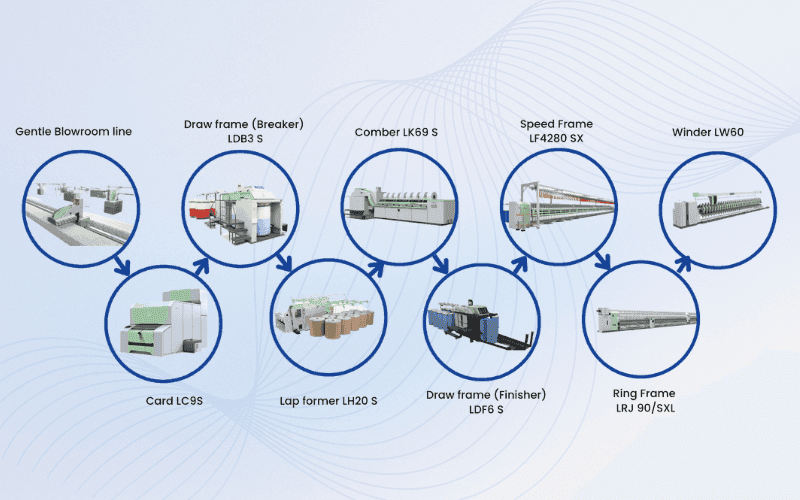
LMW with over six decades of engineering expertise, offers complete range of state-of-the-art spinning machinery from Blowroom to Winding. The smart series product portfolio comprises of,
Card Sliver System

Combing System

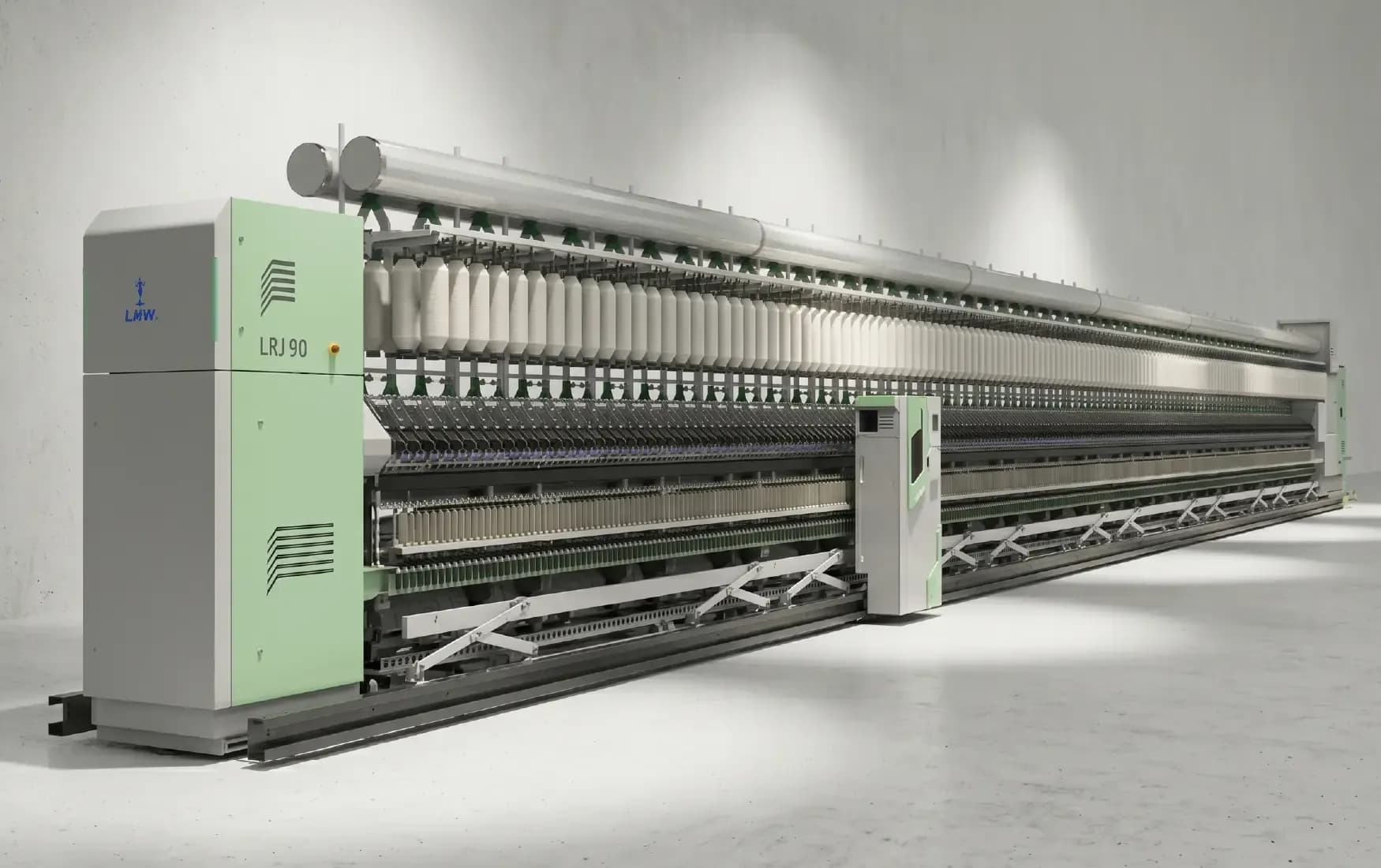
Ring Spinning System

Post Spinning System

Automation Solutions
- Lap Transportation System (LTS)
- Roving Transportation System (RTS)
- Ring frame Auto Piecer (RAP)
- Yarn Break Sensor (YBS) & Roving Stop Motion (RSM)
- Cone Transportation System & Packing (CTS)
Digital Solutions
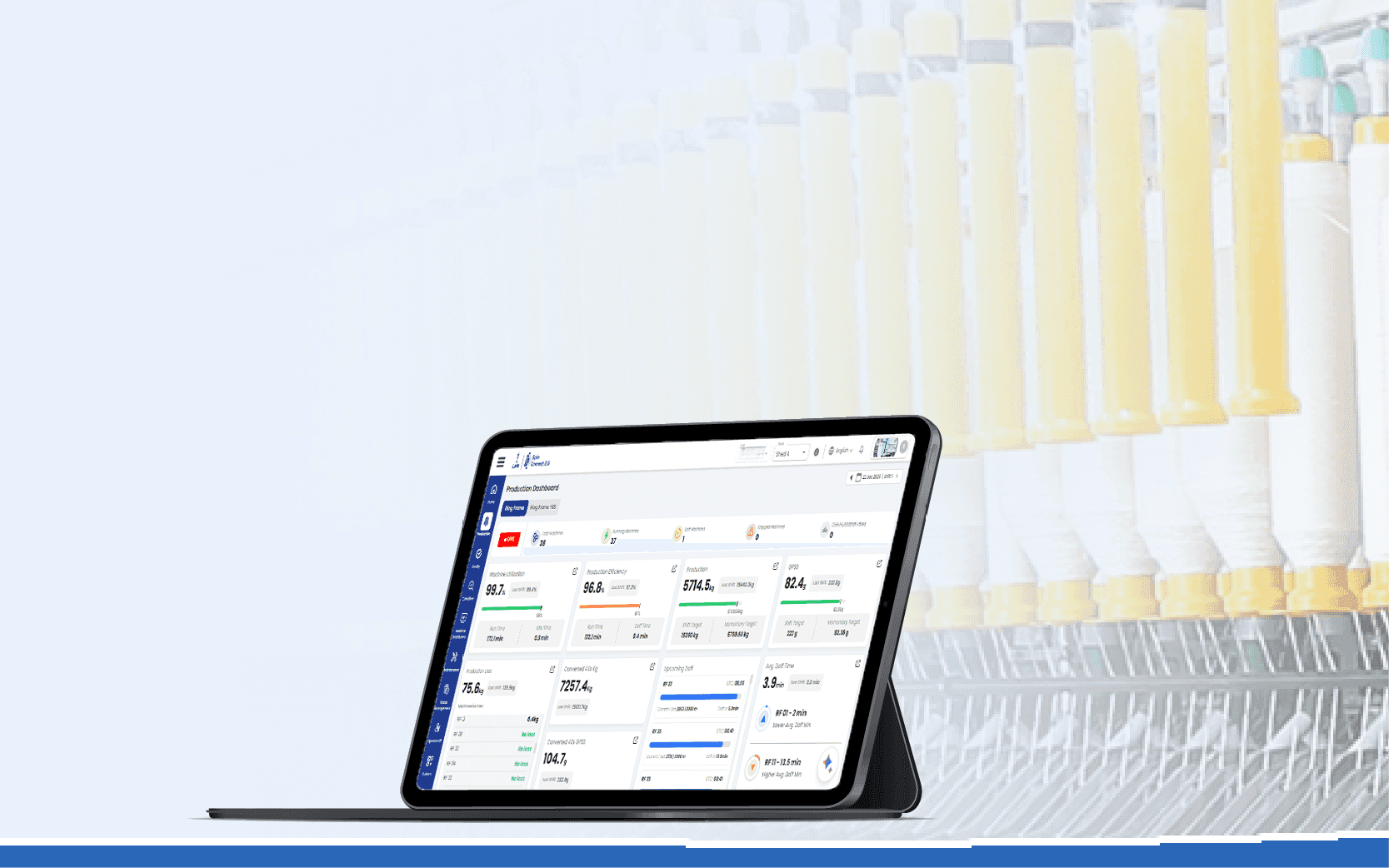
- Spin Connect 2.0
LMW plays a critical role in helping spinning mills survive, sustain, compete, and grow in the global textile environment through a combination of advanced machinery, integrated solutions, and strong service support.
LMW provides reliable, high-performance spinning machinery that ensures consistent yarn quality with minimal downtime. Its machines are engineered for efficient fiber utilization, lower end-breakage rates, and reduced energy consumption, which helps mills control costs even when raw material prices and market conditions are volatile. By focusing on durability, ease of maintenance, and stable operations, LMW enables mills to run efficiently over long periods, ensuring business continuity.
LMW equips mills with modern automation and process optimization capabilities. Features like auto-doffing, real-time monitoring, and centralized machine control reduce labor dependency and improve productivity. The ability to maintain uniform quality across large production volumes allows mills to meet international standards and customer expectations. In addition, LMW’s machines support a wide range of fibers and yarn types, giving manufacturers the flexibility to cater to diverse global markets.
LMW offers integrated digital solutions and strong after-sales services. Its monitoring systems provide production data and performance insights, helping mills make informed decisions and continuously improve efficiency. LMW’s service network, including installation, training, maintenance support, and spare parts availability ensures that customers can scale operations confidently.
LMW machines are well-suited for processing recycled fibres, which are typically shorter, more variable, and prone to higher contamination. With optimized opening, cleaning, and drafting systems, LMW equipment ensures gentle fibre handling and better control over irregularities, reducing yarn breakages and quality variations. Their precise settings and adaptable configurations allow mills to blend recycled fibres efficiently with virgin materials, achieving required yarn strength and uniformity. This capability enables manufacturers to incorporate sustainable raw materials into production while maintaining performance and productivity, supporting the industry’s shift toward eco-friendly and circular textile practices.
Conclusion
The textile industry is no longer just about yarns & fabrics, It’s about technology, sustainability, and global impact. As it continues to evolve, it offers immense opportunities for businesses ready to adapt and grow.
By combining innovation, automation, and lifecycle support, LMW enables spinning mills not just to operate efficiently, but to evolve into modern, competitive, and future-ready enterprises.